

Horticultural Punk Rockers
Selaginella, also known as spikemosses, are the horticultural version of punk rockers.
Horticultural Punk Rockers Read More »
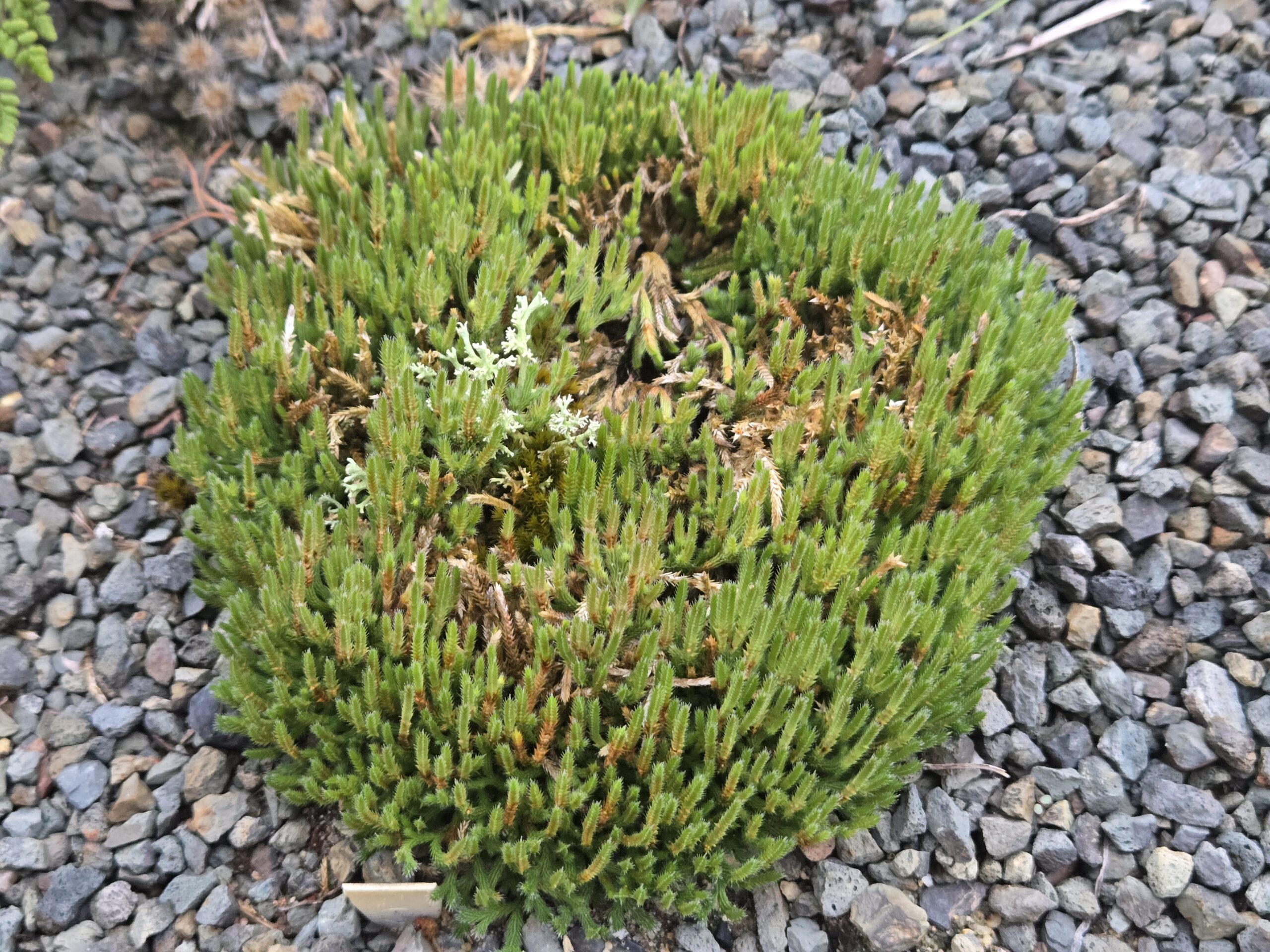
Selaginella, also known as spikemosses, are the horticultural version of punk rockers.
Horticultural Punk Rockers Read More »

We love the winter color forms of the fascinating spikemoss, Selaginella tamariscina. This Asian (China, Japan, Korea, Russia, India, Taiwan, Thailand, and Philipines) native naturally has solid green foliage, but through the centuries, Japanese gardeners have made countless selections with colored foliage. I’m particularly fond of Selaginella ‘Golden Sprite’ (below). In growth, these make very

Looking great new in the woodland garden now is the evergreen Selaginella braunii. Native to ten provinces in Southern China, this evergreen spikemoss can either grow in the ground (terrestrial), or as an epilith (on rocks), but always as a xerophyte (adapted to the driest of conditions), and always below 5,500′ elevation. The plants slowly
We were recently admiring the lovely russet fall coloration of a mat of Selaginella uncinata. This lovely woodland groundcover from Central China and south into Vietnam, has a lovely metallic blue hue during the growing season, but we also like this change to the semi-evergreen foliage in fall. This is such a great, well-behaved garden
Falling for Spikemoss Read More »
Despite the impending flooding late last week, Patrick, Zac, and I took off to the mountains of western South Carolina for a few days of botanizing. Despite the monsoon-like rains, we managed to visit seven amazing sites. Below is a highlight. One stop was at a giant granitic outcrop. The rocks are covered in an
Very Wet behind the Ears Read More »
We don’t have many Siberian plants which thrive in the southeast US, so we get pretty excited when we find one that does. I was introduced to Microbiota decussata by the late JC Raulston, back in the mid 1970s, and actually still have one of my original plants that’s still alive. Many years later, a
Proud to be a Siberian Read More »
We have long loved the amazing selaginellas, but in the fall and winter, the evergreen native Selaginella apoda looks absolutely fabulous. Here it is in the garden, 1st image is in November, 2nd image February, carpeting the ground with a touch-worthy texture. It’s only been known since 1753…surely you’ve managed to grow one by now!
Falling for selaginella Read More »