Norway Gold
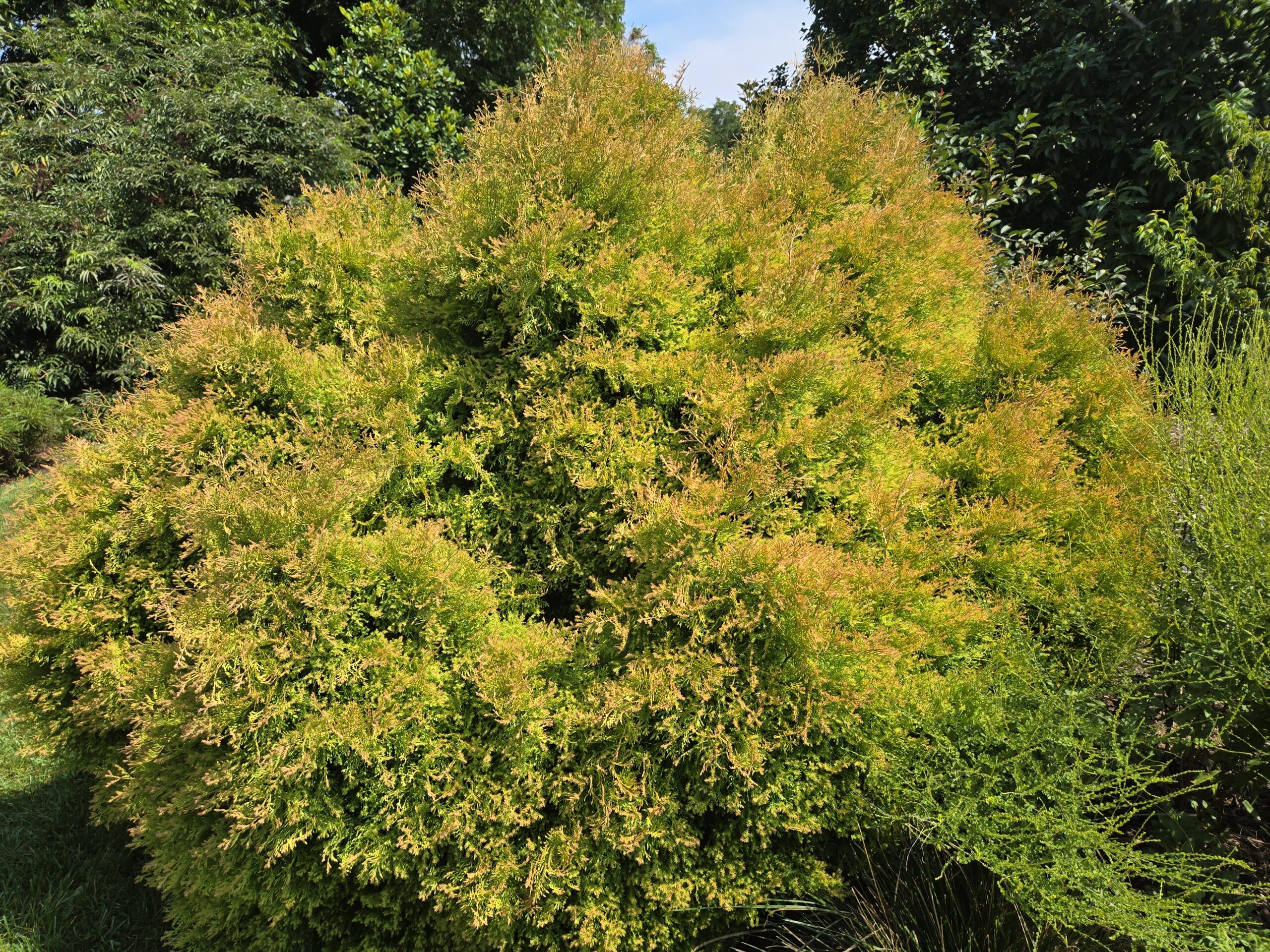
Many of the winter gold colored spruces don’t color up well in our climate. Once exception is the Norway spruce selection, Picea abies ‘Aurea Magnifica’, which has been absoluty wonderful during our cold weather.
So many folks think running a nursery is such a pastoral, relaxing career, but as with most things in life, the realities are quite different….especially during the winter months. We have 30 greenhouse cold frames, which are kept at two different temperature regimens, 35F, and 55F, depending on the needs of the plants growing in
Interrupting Those Long Winter Nights Read More »
Through the years, we have grown 21 of the 35 North American native species of bear grass species. Nolinas currently reside in the Asparagaceae family, with the likes of Agave, Dasylrion, Yucca, and of course, Asparagus. One Nolilna species we didn’t expect to be winter hardy is the Sonoran bear grass, Nolina matapensis. This very
Cozying up to a Sonoran Bear Grass Read More »
Looking lovely in the winter garden is the adult ivy, Hedera helix ‘Coal Miner’. When the winter temperature drops, the leaves take on a purple black cast that contrast with the veins, which remain green.
Most of the 1,500 plants we’ve introduced in the last 40 years remain in the gardens here at JLBG, but a few special ones we’ve lost due either to neglect, or not siting them in the proper location. Prior to building our crevice garden, we sadly lost several plants that we now know would probably
Been There, Killed That…Would like it Back Read More »
We’ve not experienced two back-to-back weekend winter storms in a while, although neither lived up to the meterologist’s hype. That’s because you can’t accurately predict non-linear systems like weather and climate with a linear model. To function well, liner models require you have data input from all of the variables. In the case of weather
Stuck in the Snownut Hole Read More »
One of our prized confers in the garden is the little-known, Nothotsuga longibracteata. Originally thought to be a hemlock, this Chinese native hails from several of the southern provinces, where they grow on acidic soils at elevations between 1,000′ and 7,000′. Sadly, they are now endangered due to excessive logging. In the wild, they eventually
Long-bracted False Hemlock Read More »
Since the 1990s, I have been enamored with the weeping red cedar, Juniperus virginiana ‘Hancock’s Weeping’. This native gem was originally discovered by plantsman Bob McCartney of Woodlanders Nursery, in Georgia’s Hancock County. We are thrilled to have this amazing specimen as part of the JLBG collection. Sadly, it’s not a plant that will ever
We’ve long been a fan of the Japanese cedar cultivar, Cryptomeria japonica ‘Gyokuryu’. This excellent plant was first brought to the US from Japan in 1967, by famed rock gardener, Joel Spingarn, who was also a founding member of the American Conifer Society. For us, this mid-sized confiner tops out at 18′ tall x 10′
Here’s Lookin’ at Gyokuryu Read More »
About five years ago, we picked up this fascinating crinkled leaf form of Sarcococca hookeriana var. digyna in the UK. Both the leaves and form are different from any other forms of sweet box we’ve grown. Since it didn’t have a valid cultivar name, we’ve christened it Sarcococca ‘Chris Crinkle’. It’s looking quite nice here
Chris Crinkle’s Sweet Gift Box Read More »