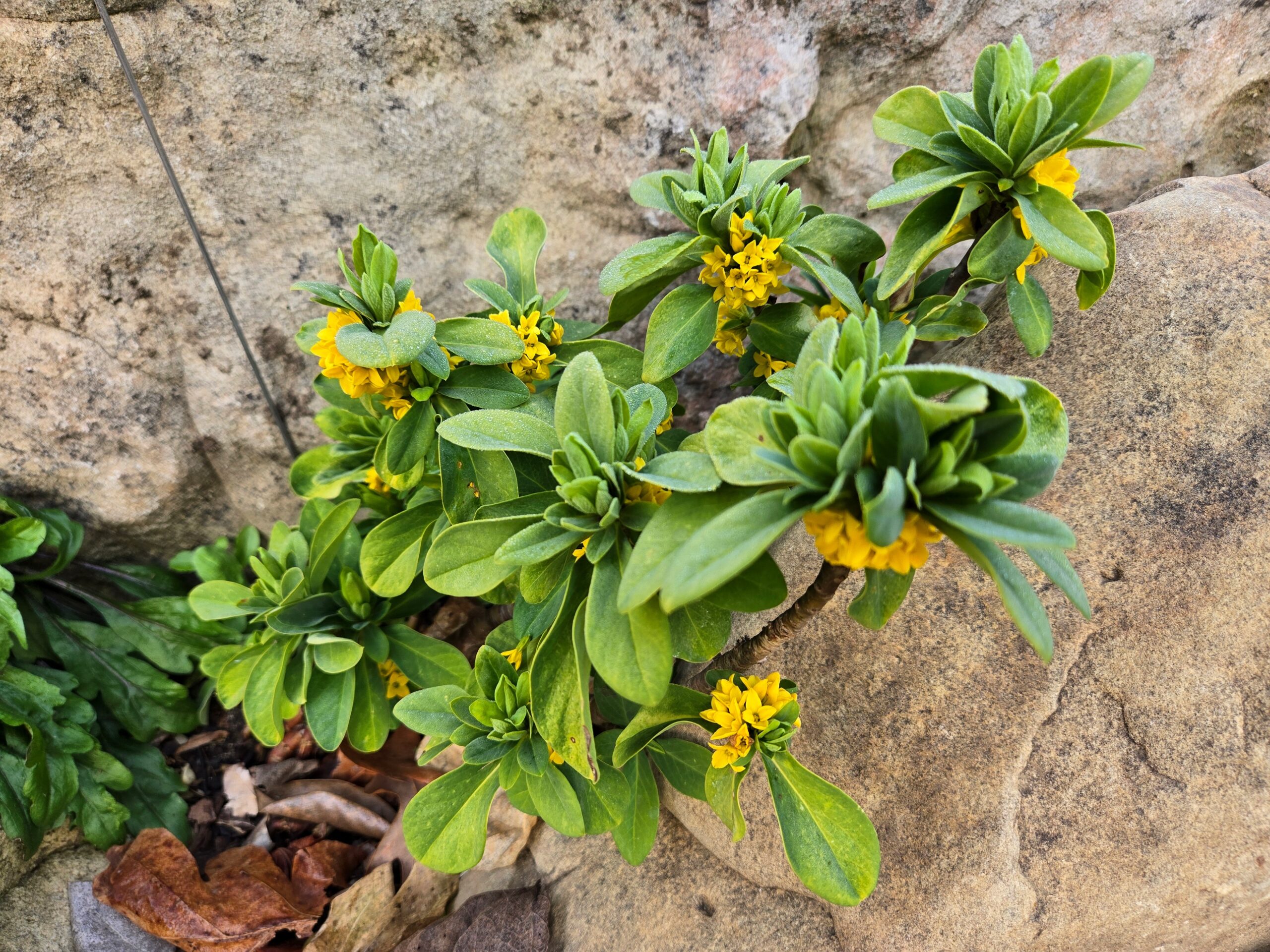
yellow flowers

Trillium grandiflorum 'Parkway Pink'

Trilliums – Sound the Bell for Round 2

Join me for another round of trillium photos that capture many of the later blooming species and hybrids grown here at JLBG. These typically wrap up here around mid-to-late April, depending on the weather. We hope this stirs up interest in this amazing group of perennials, especially the little-known species that hail from the southeast

Trilliums – Sound the Bell for Round 2 Read More »

Calceolaria sp.

Trying to Identify a Pick Pocket

Early last year, we noticed a new seedling, growing in our crevice seep. We realized it was nothing we had planted, and concluded that it belonged to the genus of pocketbook flowers, Calceolaria. We had actually tried three of the mostly South American native calceolaria species years earlier, but the genus is known for its

Trying to Identify a Pick Pocket Read More »

Dirca palustris

The Dirt on Dirca

Flowering now in the winter garden are several members of the Thymelaeceae family. The more showy of those include the genera Daphne and Edgeworthia. Also in riotous bloom, is their cousin, little-known, not so fragrant, and far less showy North American native, Dirca palustris. It’s also known by its common name, leatherwood, which comes from

The Dirt on Dirca Read More »

Mahonia 'Marvel'

A Mahonia on which to Marvel

Our specimen of Mahonia ‘Marvel’ is in full flower today. This curious plant from Georgia’s Ozzie Johnson is reportedly a seedling of Mahonia x media ‘Charity’, and while it shares the flower characteristics of the parent, I’m not sure what odd mutation occurred to remove all of the leaf spines. We think this is a

A Mahonia on which to Marvel Read More »

Phlomis x cytherea

Cytherea – The Phlomis G-Spot

Phlomis x cytherea is a little-known Jerusalem sage that we find incredibly garden worthy. First published in 1967 and named for the island of Cytherea (Kithira), which lies halfway between Mainland Greece and Crete, this natural hybrid occurs in Greece and the Greek islands, where Phlomis fruticosa and Phlomis cretica cohabitate. Compared to the much

Cytherea – The Phlomis G-Spot Read More »

Scroll to Top