Chinese native

Camellia parvilimba

Honey, Who Shrunk the Camellia?

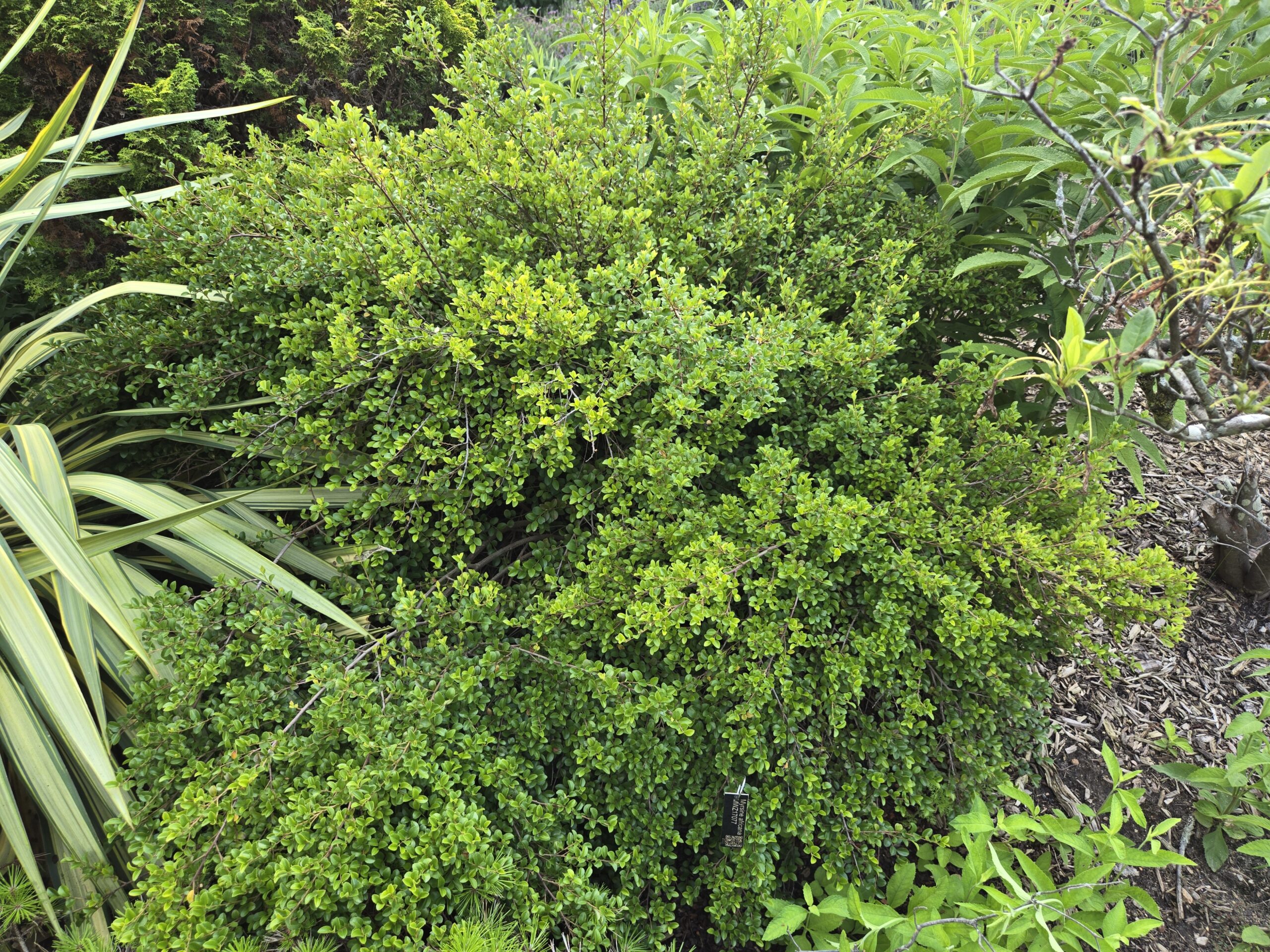
If you like botanical oddities, then the cute Camellia parvilimba is just what you’ve been looking for. This miniature species, is tiny, in terms of flowers, leaves, and overall stature. Camellia parvilimba is the victim of a taxonomic tug of war, with many taxonomists classifying it as simply a tiny form of Camellia euryoides, while

Honey, Who Shrunk the Camellia? Read More »

Parrotia subaequalis 'Ogisu'

Nearly Equal Ironwood

Below is our stunning, seventeen year old specimen of the Subequal Ironwood, now measuring 30′ tall x 20′ wide. Below, is our plant this week, showing off it’s beautiful fall color in early November. Parrotia subaequalis is the Chinese version of the better known Persian ironwood, Parrotia persica. This is so rare in the wild,

Nearly Equal Ironwood Read More »

Diospyros cathayensis

Parsimonius Persimmon

While most everyone knows about, or has had a first hand experience with a persimmon, few gardeners have ventured to grow anything outside of two species, our native, Diospyros virginiana, and the Japanese persimmon, Diospyros kaki. Would you believe that there are an astounding 787 species of persimmon. In fruit this week at JLBG is

Parsimonius Persimmon Read More »

Heptapleureum delavayi (formerly Schefflera delavayi)

Delavay’s Schefflera is a now a Heap of Pleureum

One of our favorite fall-flowering trees is the tropical-looking Schefflera delavayi. As a child, I was always enamored with schefflera on our family vacations to Florida, never dreaming it would be possible to grow these “tropicals” in our Raleigh garden. Fast forward 60 years, a number of “hardy” schefflera species in the Arailaceae family have

Delavay’s Schefflera is a now a Heap of Pleureum Read More »

Hemiboea cavaleri

Not so Cavalier

We first posted an image of Hemiboea cavaleriei last year, but wanted to share an update image, now that our clump is more established. What an amazing show for the October and November woodland garden, until a frost arrives. Our plant gets a couple of hours or morning sun, then shade in the afternoon, where

Not so Cavalier Read More »

Osbeckia stellata var. crinita 'Cangshan'

Osbeckia Stand

We have long adored plants in the Melastomataceae, which are primarily represented in commercial horticulture by the genus, Tibouchina, and our native Rhexia. We have long searched our other members of the family that might have good winter hardiness, but with a less aggressive running habit than our native rhexias. In 2020, we obtained seed

Osbeckia Stand Read More »

Hydrangea hypoglauca

Hypo-hydrangea

Flowering this week in the garden is the little-known, Hydrangea hypoglauca. Hydrangea taxonomy has been in a bit of flux, especially within the group of species that comprise the Hydrangea heteromalla complex. One of the taxonomic segregates from that group is Hydrangea hypoglauca, which hails from forested mountains between 600 and 12,000′ elevation in the

Hypo-hydrangea Read More »

Lysionotus wilsonii

Lovely Lysionotus

Recently flowering in the woodland garden at JLBG is another hardy gesneriad, the Chinese Lysionotus wilsonii. This gems hails from 2,000-6,000′ elevation in China’s Yunnan and Sichuan province, where it’s found in woodland valleys. That’s near the minimum elevational range at which we’d expect winter hardiness in Zone 7b/8a, so we are thrilled that it

Lovely Lysionotus Read More »

Scroll to Top