

Hungry Eyes
Instead of singing the blues, this Asian praying mantis is hanging out with the blues of Ceratostigma willmottianum, while it stealthily waits, like the invisible man, for Grub Hub to arrive with dinner.
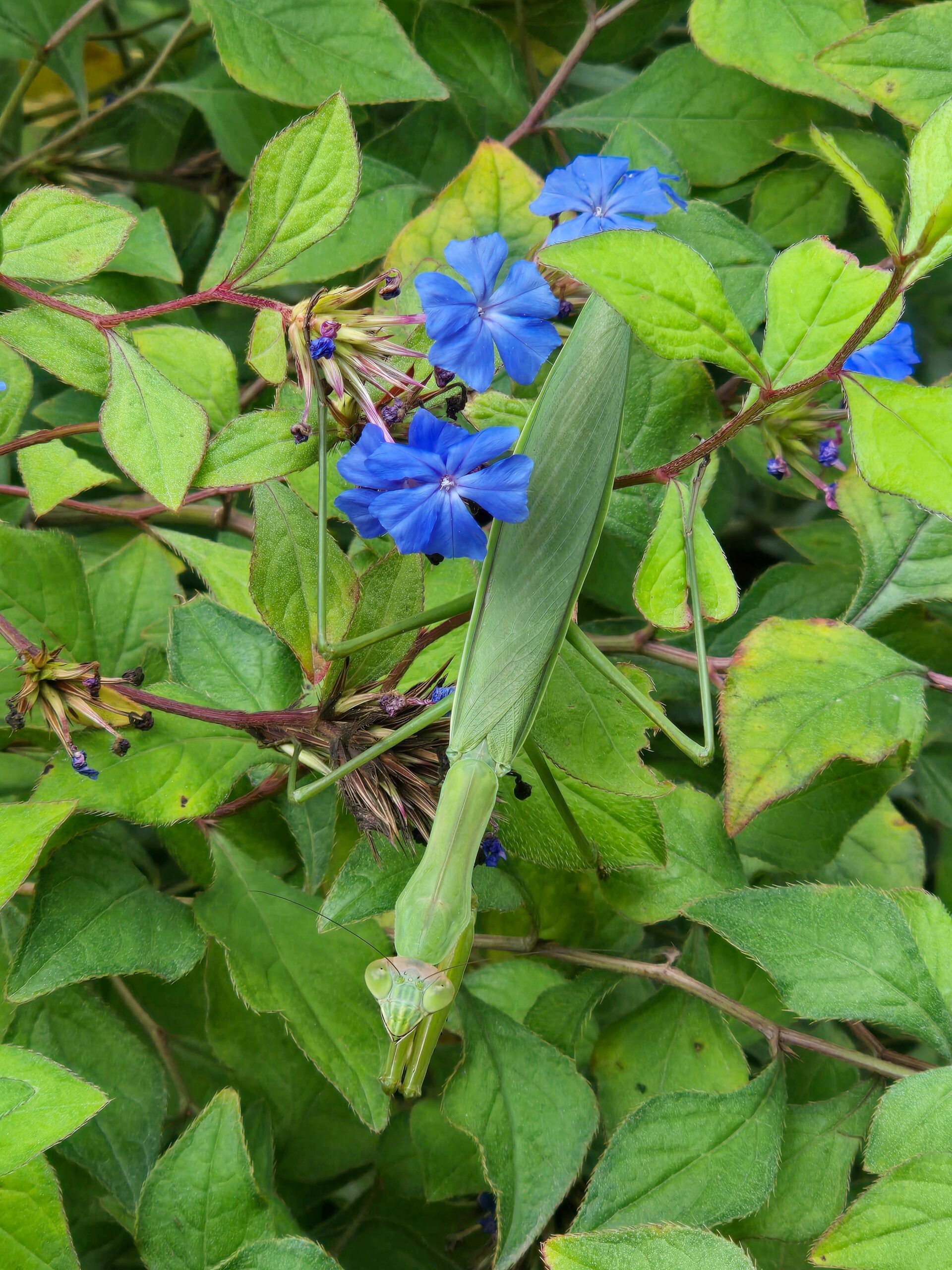
Instead of singing the blues, this Asian praying mantis is hanging out with the blues of Ceratostigma willmottianum, while it stealthily waits, like the invisible man, for Grub Hub to arrive with dinner.

While fall is the season for garden mums, most folks grow only the fancy hybrids. While we love these which make good perennials, we hope you won’t forget about some of the amazing wild species, especially Chrysanthemum zawadzki. This Eurasian species is a dwarf, reaching only 1′ in height. It was described in 1829 from

This spring, we posted photos of the obscure Japanese native woodlander, Ainsliaea cordifolia, but we wanted to follow up with the same plant in riotous bloom, as we move into late October. There are actually 57 species of this Aster family genus, all from Southeastern Asia. Growing Ainsliaea in your home garden is certainly a
Ainsliaea in Riotous Bloom Read More »

I first met the North American (Mexico) native perennial, Galphimia glauca on a 2019 visit to the former Unique Plant Nursery and Garden in NC, returning home with a starter plant, propagated by plantsman/designer, Sebastian Hamilton. It didn’t take long to become a huge fan of the genus. Galphimia is a member of the Malphigiceae
The Gold of Galphimia Read More »

It’s hard to resist posting photos of the late-flowering, Southeast US native, Symphyotrichum (Aster) elliottii. It’s namesake was SC Natural History and Botany Professor, Steven Elliott (1771-1830). After most of the garden has shut down for fall, this amazing and exceedingly vigorous aster bursts into flower, quickly becoming a landing pad for an array of

One of the poster horticultural children for fall flowering is the Chinese native, Hibiscus mutabilis. Because this plant has been shared so widely as a pass-along in deep south gardens, it picked up the common name, confederate mallow. The specific epithet name “mutabilis” was selected because many of the clones have flowers that emerge white,
The Mutable Mallow Read More »
One of the stars of the fall garden at JLBG is the little-known Peshman’s Snowdrop, Galanthus peshmanii. This amazing Greek and Turkish species, named after the late Turkish botanist, Hasan Peşmen (1939-1980), was only officially recognized in 1994. It’s closely related to the better-known Galanthus reginae-olgae. Our nine year-old clump has been an absolutely wonderful
Peshman’s Snowdrop Read More »
We’ve been growing the fall-flowering Farfugium japonicum for nearly 40 years, and despite growing numerous cultivars as well as seedlings, had seen no difference in the standard yellow flower color, until a 2008 visit to the Georgia garden of plantsman Ozzie Johnson. There, I first met the cultivar, ‘Beni’, which in Japanese, means red flowers.
Beni and the Not Yets Read More »
One of the frustrating things about growing and propagating plants is when you find an incredible plant, offer it for sale, and virtually no one buys it. Such is the case with the Texas native, Ageratina havanensis, aka: Havana Mistflower, Eupatorium havanense. This fascinating woody perennial, formerly classified as a eupatorium, forms a 3′ tall
If you grow it, they may not buy it Read More »
Another of our favorite fall alliums is the lovely Allium kiiense, which hails from the Honshu Japan penisula by the same name. Last year, we had so many plants that went unpurchased, we planted a mass instead of throwing them out. Below is that mass in full flower this week. Hardiness Zone 5a-9b.
From Kii with Love Read More »