plant exploration

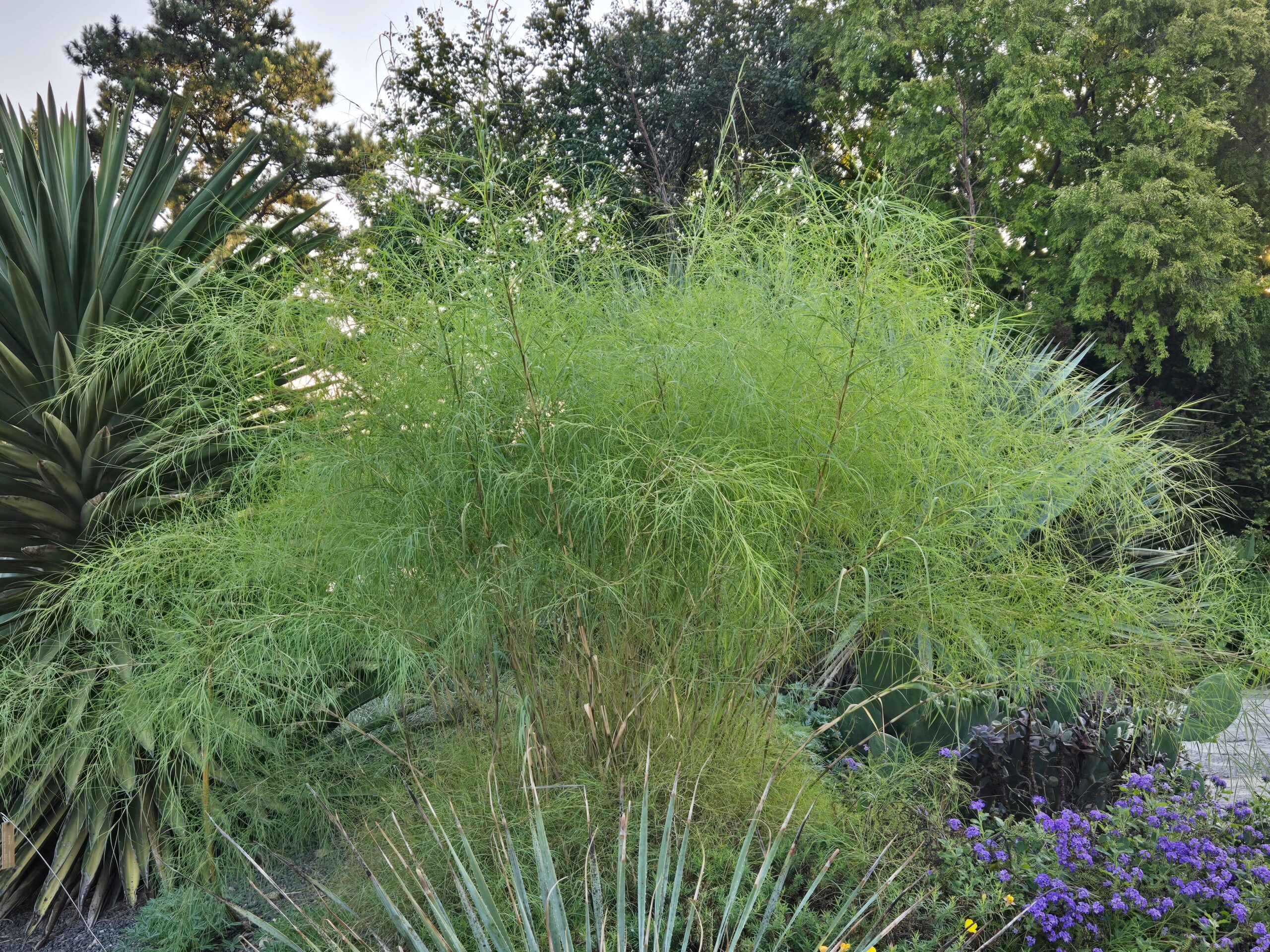
Muhlenbergia dumosa 'Patagonia'

Bamboo Muhly

Looking great in the garden in summer is our new selection of bamboo muhly grass, Muhlenbergia dumosa ‘Patagonia’. Prior to this introduction, this splendid ornamental grass could only be overwintered from Zone 9 south. This Patrick McMillan collection adds at least one additional hardiness zone for gardeners. To achieve maximum winter hardiness, it needs summer

Bamboo Muhly Read More »

Jesse Perry, NC

Rescuing a Bunch of Ferners

For years, Raleigh botanist, and retired NC Museum of Natural Sciences, Education Director, Jesse Perry, has been sharing several of the amazing botanical curiosities, that he’s run across in his 70+ years of traipsing through the natural areas across the state. Just a few of Jesse’s excellent introductions that we’ve had the pleasure of introducing,

Rescuing a Bunch of Ferners Read More »

Aucuba japonica var. borealis 'Sea of Japan'

See the Sea of Japan

We just snapped this image of our clump of Aucuba japonica var. borealis ‘Sea of Japan’. In parts of the county where typical Aucuba japonica isn’t winter hardy, this tetraploid subspecies may be worth a try. This subspecies hails from one of coldest regions of coastal Japan, in northern Honshu, where it’s subject to an

See the Sea of Japan Read More »

Cornus wilsoniana

Wilson’s Winter Dogwood

We typically think of dogwoods of being seasonally interesting plants in spring, but the semi-evergreen Cornus wilsoniana changes that narrative. Despite the clusters of small flowers in May, this Chinese species is most prized for its amazing white patterned bark, which is especially noticeable in winter, against the prevailing background of brown. Sadly, this amazing

Wilson’s Winter Dogwood Read More »

Arachnioides standishii 'Mt. Daisen'

What’s up with Upside-down Ferns

Looking fabulous in the winter garden in mid December is the amazing Arachnioides standishii. The common name, upside down fern, refers to the fronds, which appear to be inverted. This slowly spreading fern is tardily deciduous, meaning it remains evergreen until temperatures drop to 10-15 degrees F. Although the fine texture makes it look delicate,

What’s up with Upside-down Ferns Read More »

Asarum minus 'Woodland Wonder'

Woodland Wonder

We wanted to share a late November photo of our selection of our native evergreen wild ginger, Asarum minus ‘Woodland Wonder’, which came from a division from a plant we found growing back in 2000, in North Carolina’s Davidson County. Perhaps, one day, we’ll have enough of this exceptional clone to share.

Woodland Wonder Read More »

Picea morrisonicola

Morrison’s Spruce

It was on a 2008 expedition to Taiwan, where I met the Taiwan native spruce, Picea morrisonicola. This amazing plant was named in honor of its native habitat on Mt. Morrison, which was, as was the colonialistic habit at the time, named for English missionary, Robert Morrison (1782-1834) . Today, the mountain is known as

Morrison’s Spruce Read More »

Scroll to Top