pollinator plant

Eryngium ravenelii 'Charleston Blues'

Ravishing Ravenel

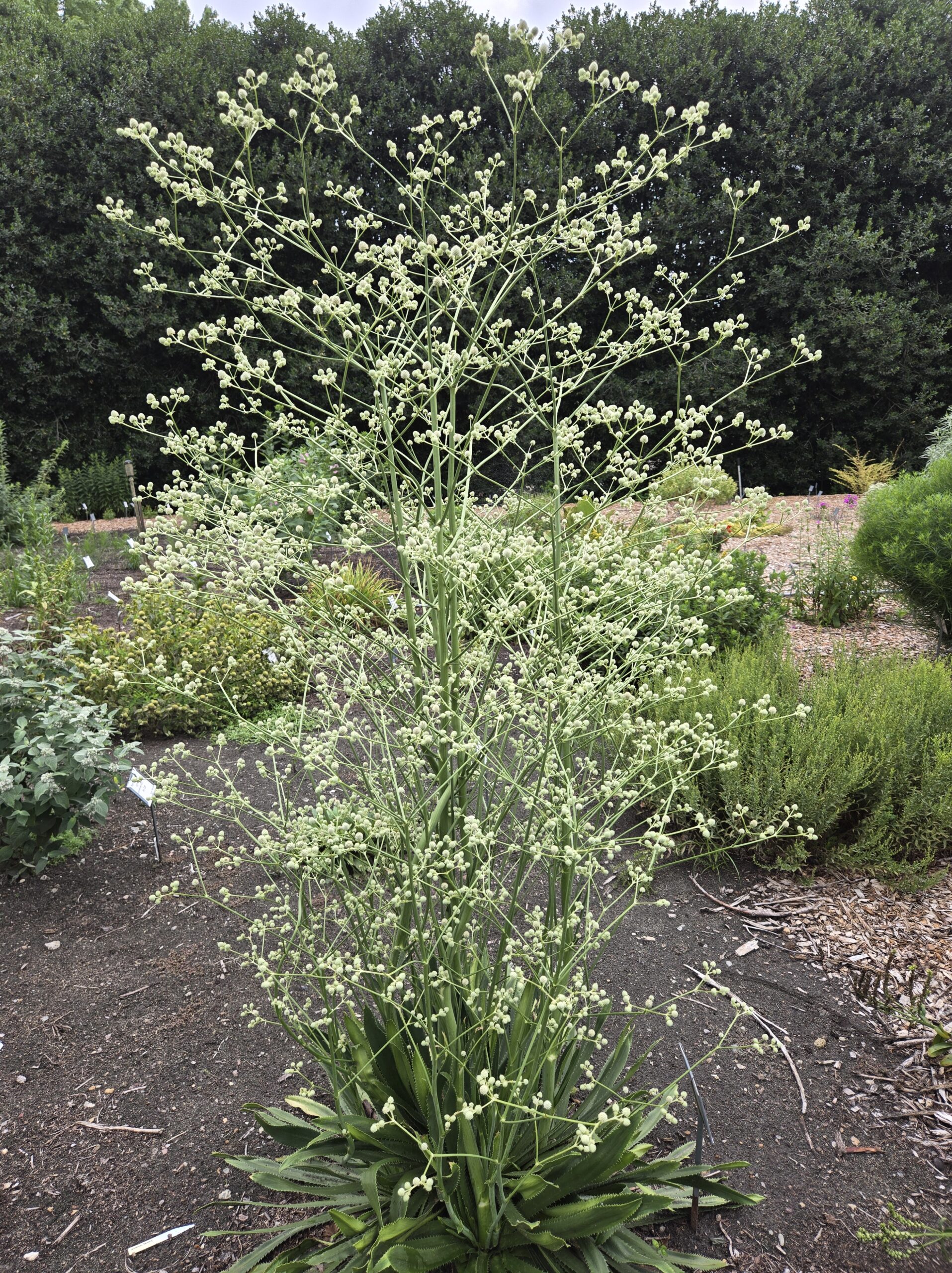
If you’re tired of failing with those short-lived European eryngiums that look so good in gardening magazines, look no further. Looking absolutely dazzling for the last few weeks is the extraordinary Southeast (SC to Florida) native perennial, Eryngium ravenelii. This amazing plant, which is still virtually unknown in gardens, is found naturally in flooded ditches

Ravishing Ravenel Read More »

Zephyranthes 'Buttery Billowy Blowout'

When Life Gives you Rain, Grow Rain Lilies

Because we ‘ve had an abnormally wet summer, the rain liles of the genus Zephyranthes and Habranthus have been blooming up a storm, and the insects that feed on them, like Tiger Swallowtail butterflies, are everywhere. Within 2-4 days after a rain, during the summer months, the clumps burst forth with an amazing floral show.

When Life Gives you Rain, Grow Rain Lilies Read More »

Aristolochia watsonii

My Dear Watson, You make a Good Snack

Our patch of the Texas native pipevine, Aristolochia watsonii is home this week to some very happy, and very voracious pipevine swallowtail caterpillars. Although the plant will soon be defoliated, it’s designed as such, and will quickly reflush with new foliage once the caterpillars have molted. We love the color combination of the bronze leaves

My Dear Watson, You make a Good Snack Read More »

Stokesia laevis 'Peachie's Pick'

The Season for Peachie

Looking great in the garden now is Stokesia laevis ‘Peachie’s Pick’. This incredible selection of our native Stokes aster was discovered as a seedling in the Mississippi garden of gardener/floral designer, Sara “Peachie” Saxon, and in 2001, it was introduced to the commercial trade by the former Niche Gardens of North Carolina. Stokes aster is

The Season for Peachie Read More »

Agave x protifolia 'Brontosaurus'

The End of the Century is Approaching

2025 sets a record as we welcomed 22 different century plants into flower. We’ve set up our ladders for the pollination ritual, where we hike to the top with pollen we forcefully extracted from potential suitors and do our best to impregnate the moms. Then, we wait and hope for viable seed. This is Agave

The End of the Century is Approaching Read More »

Pediomelum piedmontanum 'Columbia'

Georgia Breadroot

Just finishing up its flowering show in the garden is the baptisia cousin, Pediomelum piedmontanum ‘Columbia’, commonly known as Dixie breadroot. Commonly, probably isn’t exactly the right word, since this southeast native is anything but common. In fact, it’s only known from three counties, one in Georgia, and two in South Carollina, hence a G1

Georgia Breadroot Read More »

Cercis chinensis 'Avondale'

The Bee’s Knees

We were walking by our specimen of Chinese redbud (Cercis chinensis ‘Avondale’) recently, and couldn’t get over the number of feeding bees, including both honeybees, as well as our native bees. Chinese redbuds have far more flowers than our native redbuds, so can feed more pollinators, although we certainly love both. It’s good that the

The Bee’s Knees Read More »

Symphyotrichum elliottii

Elliott’s Nest

It’s hard to resist posting photos of the late-flowering, Southeast US native, Symphyotrichum (Aster) elliottii. It’s namesake was SC Natural History and Botany Professor, Steven Elliott (1771-1830). After most of the garden has shut down for fall, this amazing and exceedingly vigorous aster bursts into flower, quickly becoming a landing pad for an array of

Elliott’s Nest Read More »

Scroll to Top